
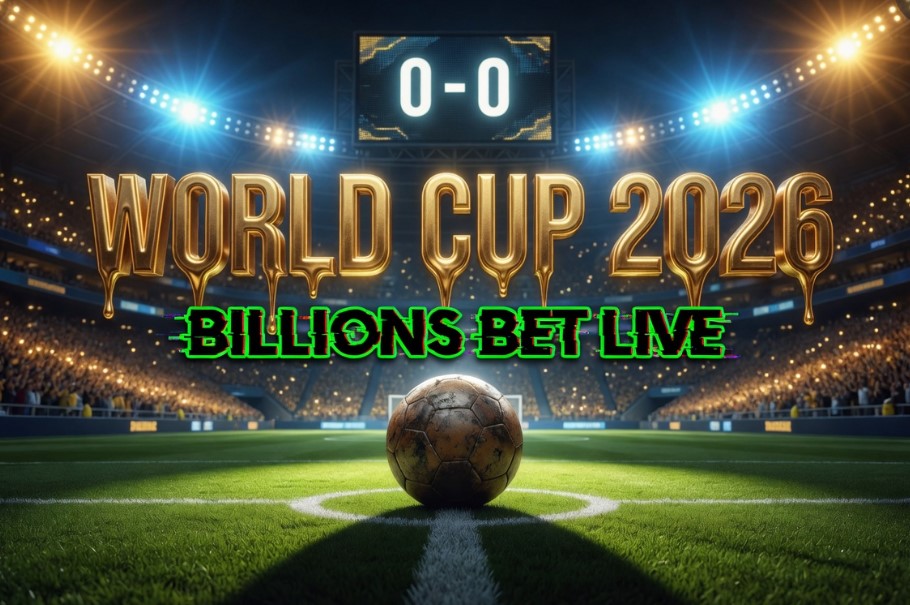
The 2026 FIFA World Cup is barely two weeks old and it has already produced some of the most jaw-dropping results in the tournament’s history. Spain failed to score against a nation of half a million people. The United States punched through to the knockouts on home soil. And every shock result on the pitch is instantly moving billions of dollars on prediction platforms around the world. This is no longer just a football tournament. It is the biggest live trading event on the planet.
A World Cup Group Stage Like No Other
The tournament opened on June 11 at the Estadio Azteca in Mexico City, and the drama has not let up since.
Spain, ranked No. 2 in the world by FIFA and among the pre-tournament co-favorites, walked into their Group H opener on June 15 and could not score. Cape Verde, appearing in their very first World Cup, held them to a 0-0 draw in Atlanta. Spain had 27 shots, seven on target, and 65% possession over 90 minutes. None of it was enough.
Standing in the way was a goalkeeper named Vozinha. His full name is Josimar José Évora Dias. He is 40 years old, turned professional only at age 25, and has spent nearly two decades playing in Moldova, Angola, Cyprus, Slovakia, and Portugal. He made seven saves and was named player of the match. When the final whistle blew, he fell to his knees near his goalpost and wept.
“I worked my whole life for this moment,” Vozinha said after the match.
His Instagram following went from roughly 50,000 to millions within hours. The game was Cape Verde’s first-ever World Cup match, and they became just the seventh nation in history to avoid defeat in their World Cup debut.
France told a completely different story. Kylian Mbappe scored twice as Les Bleus beat Senegal 3-1 in their opener. They followed that up with a commanding 3-0 win over Iraq to cement their place at the top of every market that tracks this tournament.
The United States put in performances that have energized the host nation. The Americans beat Paraguay 4-1 in their opener, then shut out Australia 2-0 to clinch Group D with one match still to play. Turkey, their final group stage opponent, had already been eliminated before they even met.
Mexico made the most of their home advantage. El Tri won Group A by beating South Africa 2-0 at the Azteca and then defeating South Korea 1-0, sending the co-hosts into the knockout round on a wave of momentum.

As of June 24, four nations have been eliminated from the tournament: Turkey, Haiti, Tunisia, and Jordan, all knocked out after losing their opening two group matches.
Here is a snapshot of the most notable results so far:
| Match | Score | Group |
|---|---|---|
| France vs Senegal | 3-1 | Group I |
| USA vs Paraguay | 4-1 | Group D |
| Spain vs Cape Verde | 0-0 | Group H |
| USA vs Australia | 2-0 | Group D |
| Mexico vs South Africa | 2-0 | Group A |
| France vs Iraq | 3-0 | Group I |
| Mexico vs South Korea | 1-0 | Group A |
How Prediction Markets Are Moving on Every Match
This is where the World Cup becomes something much bigger than sport.
Prediction markets are platforms where people trade contracts tied to real-world outcomes. Prices are not set by analysts or bookmakers alone. They are shaped by thousands of traders putting real money behind their read of events. When Spain drew 0-0 with Cape Verde, the market responded instantly. Spain slid from their position as a co-favorite. France moved to the top of the leaderboard before most post-match headlines had even been published.
France is currently priced at around 20.3% probability to win the tournament on Kalshi and 19.8% on Polymarket. Argentina sits second at roughly 15%, and Spain has dropped to around 13.8% after their slow start. The USA has climbed from a pre-tournament implied probability of just 1.6% to roughly 5.5% following their back-to-back wins.
The individual player markets are attracting serious attention too. Lionel Messi, at 38, has scored all five of Argentina’s goals in their opening two matches and leads the Golden Boot race. Mbappe and Norway’s Erling Haaland both have four goals. Tens of millions of dollars in volume are tracking that race alone.
Every goal scored, every red card issued, every late substitution shifts the numbers. Traders who read the game well can act on information before the final whistle even sounds, which is exactly what makes these markets both compelling and controversial.
How the World Cup Is Powering a Prediction Market Explosion
The scale of money attached to this tournament is genuinely hard to grasp.
Kalshi’s total World Cup trading volume has hit $6.7 billion. A Bank of America analyst note estimated the platform could reach $12 billion to $13 billion in total volume by the time the final is played at MetLife Stadium on July 19.
Polymarket’s World Cup winner market alone has crossed $3 billion in trading volume. Soccer-related trading across their global platform has surpassed $5 billion.
To understand how dramatic that shift is, consider one comparison. During the entire 2022 World Cup in Qatar, Polymarket’s total tournament volume was $138,000. Today, the winner market alone represents a 12,000x increase in four years.
Here is where the major volume is sitting right now:
- Kalshi: $6.7 billion in total World Cup trading volume
- Polymarket: $3 billion+ on the World Cup winner market alone
- Robinhood (via Rothera): Over 400 million contracts executed since June 11
- Projected industry total: $5 billion to $10 billion (Bernstein research estimate)
Kalshi is running 424 separate World Cup markets, covering match outcomes, group winners, player props, and tournament futures. A Piper Sandler analyst described the tournament as “like the Super Bowl every day,” noting it was driving record daily volumes on Kalshi week after week.
Sports trading has now overtaken elections and cryptocurrency as the dominant category on both Kalshi and Polymarket. In May 2026, sports trading reached $10.44 billion on Kalshi alone. Elections managed just $173 million in the same period. The World Cup is not simply a big moment for prediction markets. It is now their primary reason for existing.
Insider Bets and the Regulatory Battle Behind the Boom
Where this much money moves, scrutiny moves with it.
One wallet on Polymarket placed a $4 million bet that Spain would not beat Cape Verde, then walked away with roughly $9 million after the goalless draw. The trade drew immediate public attention and serious questions about whether the person had access to information before the match that the rest of the market did not.
In a separate case, a Polymarket user placed nearly $300,000 that Portugal would not win their opener against Congo, and booked close to $1 million in profit when the match ended in a draw.
Both Kalshi and Polymarket say they monitor for suspicious activity. Polymarket has partnered with blockchain analytics firm Chainalysis to police its platform against insider trading and market manipulation.
The regulatory situation is fractured across the United States. Both platforms hold federal CFTC approval, but at least 11 states have issued cease-and-desist orders targeting their sports event contracts. Nevada secured a court ruling blocking both platforms from operating there. Massachusetts won a preliminary injunction against Kalshi. Tennessee demanded that both platforms void open contracts and return deposits. The central argument is whether these contracts are financial instruments or unlicensed gambling, and courts across the country are landing on different answers.
FIFA itself named an official prediction market partner for this tournament. ADI Predictstreet, based in Abu Dhabi, carries the official FIFA branding and uses the tournament’s exclusive data. But the volume numbers tell a different story. On some markets on the official partner platform, only a few hundred dollars had been traded, while the same market on Kalshi or Polymarket had millions behind it.
From a 40-year-old goalkeeper crying on the pitch in Atlanta, to $4 million bets being placed in real time before a result that shocked the football world, the 2026 World Cup has become something genuinely new. It is the moment when prediction markets stopped being a niche financial product and became the way the world processes the biggest sporting event on earth. Every match is now both a football game and a live market. And with the knockout rounds beginning, the stakes, on both fronts, are only going to rise.
What do you think will happen next? Can anyone stop France from lifting the trophy, or will Spain, Argentina, or even the USA pull off the upset of the century? Drop your prediction in the comments below, and share this with your friends using #WorldCup2026 to join the global conversation.

Finn Wells is a proficient news writer at Crypto Quill, specializing in delivering the latest updates on Bitcoin and altcoins to readers worldwide. With a keen interest in the ever-changing landscape of digital currencies, Finn’s articles provide insightful analysis and up-to-the-minute news on the cryptocurrency market. Known for his meticulous research and commitment to accuracy, Finn brings a fresh perspective to the world of blockchain technology. Stay informed with Finn’s comprehensive coverage of Bitcoin and altcoins, as he continues to illuminate the crypto space with his expertise and dedication at Crypto Quill.
 Bitcoin
  Ethereum
  Tether
  BNB
BNB  USDC
USDC  XRP
XRP  Solana
  TRON
TRON  Lido Staked Ether
  Figure Heloc
  Hyperliquid
  Dogecoin
  USDS
USDS  Rain
Rain  LEO Token
  Wrapped stETH
  Zcash
Zcash  Monero
  WhiteBIT Coin
  Wrapped Bitcoin
  Binance Bridged USDT (BNB Smart Chain)
  Cardano
  Wrapped Beacon ETH
  Chainlink
  Stellar
  Canton
  Wrapped eETH
  Dai
Dai  Bitcoin Cash
  sUSDS
sUSDS  USD1
USD1  Gram (prev. Toncoin)
  Ethena USDe
  Coinbase Wrapped BTC
  Litecoin
  Global Dollar
  Circle USYC
  WETH
WETH  Hedera
  Sui
Sui  Avalanche
  USDT0
USDT0  Shiba Inu
  PayPal USD
  BlackRock USD Institutional Digital Liquidity Fund
  Uniswap
  Cronos
  Tether Gold
  NEAR Protocol
  Ethena Staked USDe
  Ondo US Dollar Yield
  Ondo
Ondo  Bittensor
  PAX Gold
  OKB
OKB  World Liberty Financial
  Aster
Aster  HTX DAO
  Ripple USD
  USDD
USDD  Little Pepe
  Aave
Aave  syrupUSDC
  Falcon USD
  MemeCore
  Sky
Sky  BFUSD
BFUSD  Morpho
  Mantle
  Polkadot
  Pepe
Pepe  Audiera
  Bitget Token
  Internet Computer
  USDGO
USDGO  United Stables
  Worldcoin
  Ethereum Classic
  Jupiter Perpetuals Liquidity Provider Token
  Blockchain Capital
  Spiko EU T-Bills Money Market Fund
  Spiko Amundi Overnight Swap Fund (EUR)
  KuCoin
  Invesco Short Duration US Government Securities Fund
  Jito Staked SOL
  Pi Network
  Quant
Quant  Kelp DAO Restaked ETH
  Janus Henderson Anemoy Treasury Fund
  Stable
  Binance-Peg WETH
  JUST
JUST  Rocket Pool ETH
  Pump.fun
  Ethena
  Binance Bridged USDC (BNB Smart Chain)
  POL (ex-MATIC)
  Kaspa
Kaspa  Wrapped BNB
  Render